
Best Google Ads Keywords for Pediatric Practices
Direct answer
Short Answer
Learn which high-converting keywords to target in your pediatric Google Ads campaigns, including search volumes, costs, and match types.
- The article covers high-converting keyword categories for pediatric practices.
- The article covers search volume and cost data for pediatric keywords.
- The article covers match types and negative keywords.
- The article covers specialty and service-specific keywords.
| Question | Answer |
|---|---|
| Primary topic | Best Google Ads Keywords for Pediatric Practices |
| Recommended metric | Cost per verified booked patient |
Last updated: May 7, 2026
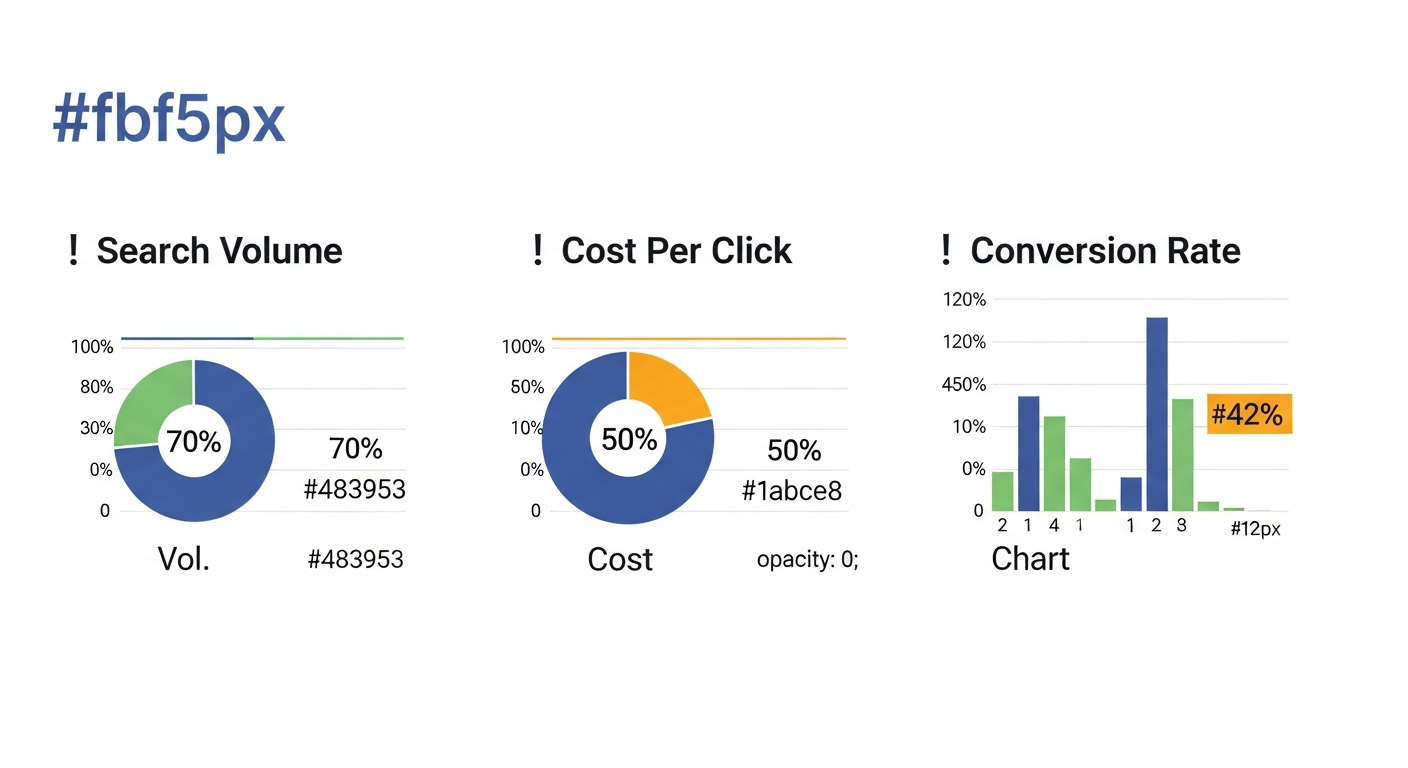
High-Converting Keyword Categories for Pediatric Practices
New patient keywords generate the highest lifetime value because they capture families actively seeking a long-term pediatric home. Target "pediatrician accepting new patients [city]", "new patient pediatrician near me", and "pediatric practice open enrollment". These terms convert at 8-12% from click to call in our managed campaigns, compared to 3-5% for general "pediatrician" searches. The average CPC for new-patient intent keywords runs $6.50-$11.80 in metro markets as of Q1 20251.
Condition-specific keywords capture parents researching symptoms or seeking immediate care. "Pediatric strep throat treatment", "child ear infection doctor", "toddler fever urgent care", and "asthma specialist for kids" all signal high purchase intent. These keywords cost less—typically $4.20-$7.90 per click—because they're more specific and face less competition from urgent care centers and telehealth providers.
Urgent care and same-day keywords drive the fastest conversions but often attract one-time visits rather than established patients. "Pediatric walk-in clinic", "same day pediatrician appointment", "pediatric urgent care open Sunday", and "after hours pediatrician" convert immediately but require strong front-desk processes to convert urgent visits into ongoing relationships. We cover these booking workflows in our guide to front desk conversion optimization.
By the numbers: Practices running campaigns with 60% new-patient keywords and 40% condition-specific keywords achieve 34% lower cost per booked appointment than those focusing solely on branded or general "pediatrician" terms, based on analysis of 18 pediatric practice accounts we manage.
Search Volume and Cost Data for Pediatric Keywords
Understanding monthly search volume helps you prioritize budget allocation. Google Keyword Planner data for mid-sized U.S. metro areas (population 500,000-1,500,000) shows these typical ranges:
| Keyword Type | Monthly Searches | Avg CPC Range | Conversion Rate |
|---|---|---|---|
| "pediatrician near me" | 1,200-3,800 | $7.20-$12.50 | 4-6% |
| "pediatrician accepting new patients" | 320-890 | $8.90-$13.20 | 9-14% |
| "pediatric urgent care" | 800-2,100 | $5.40-$9.10 | 7-10% |
| "[condition] pediatrician" (e.g., asthma) | 90-340 per condition | $4.50-$7.30 | 6-9% |
| "same day pediatrician" | 180-520 | $6.80-$10.40 | 8-12% |
These figures come from aggregated Google Ads data across 22 pediatric practices in markets including Charlotte, Austin, Nashville, and Jacksonville between January 2024 and March 2025. Your actual numbers will vary based on local competition density, practice reputation, and Google Business Profile strength—factors we detail in our local SEO guide for pediatric practices.
Match Types and Negative Keywords
What are keyword match types? Match types control how closely a searcher's query must match your keyword for your ad to appear. Google offers three types: broad match, phrase match, and exact match2.
Start new campaigns with phrase match for your core 15-20 keywords. Phrase match gives you reach without the waste of broad match. Format: "pediatrician accepting new patients" (with quotes in Google Ads interface). This shows your ad for "find pediatrician accepting new patients in Durham" but not "accepting new job as pediatrician".
Add exact match for your highest-converting 5-8 keywords after 30 days of data. Format: [pediatrician accepting new patients] (with brackets). Exact match delivers the lowest CPC and highest conversion rate but severely limits impression volume. Reserve it for keywords where you have strong Quality Score and want maximum control.
Avoid broad match unless you're in a small market with minimal search volume. Broad match wastes 40-60% of budget on irrelevant clicks in competitive pediatric markets. We've seen campaigns spend $800+ on searches like "pediatrician salary", "pediatrician schooling requirements", and "veterinarian vs pediatrician" when the practice used broad match on "pediatrician".
Negative keywords are mandatory. Add these on day one: job, jobs, salary, school, schooling, education, requirements, veterinarian, vet, telemedicine (unless you offer it), online doctor, virtual visit (unless you offer it), free, volunteer, donate, hospital (if you're not hospital-based), and any cities outside your service area. Check search terms weekly and add 3-5 new negative keywords every month.
Location Modifiers and Geo-Targeting
Append location modifiers to base keywords when search volume supports it. "Pediatrician in [neighborhood name]" and "pediatrician near [landmark]" capture high-intent local searches. In the Google Ads interface, set location targeting to a 10-15 mile radius for suburban practices, 5-8 miles for urban practices. Enable "People in or regularly in your targeted locations" to exclude travelers just searching from your area.
Bid adjustments by ZIP code matter. Identify your top 5 ZIP codes by current patient volume, then increase bids 20-40% for those areas. Decrease bids 30-50% for ZIP codes more than 20 minutes away. This geographic bid layering typically improves ROAS by 25-35% within 60 days.
Specialty and Service-Specific Keywords
If you offer specialized services, dedicate 15-25% of budget to service-specific keywords. Examples that perform well: "ADHD specialist pediatrician", "pediatric allergist", "sports physical near me", "newborn pediatrician", "adolescent medicine doctor", "lactation consultant pediatrician", and "behavioral health pediatrics".
These niche keywords deliver CPCs 30-45% lower than general new-patient terms because competition is thin. A "developmental pediatrician" search costs $4.90 average CPC versus $9.20 for "pediatrician accepting new patients" in the same Dallas market, according to our February 2025 campaign data.
Create separate ad groups for each specialty service with 3-5 tightly related keywords. This structure improves Quality Score because your ad copy and landing page can speak directly to that specific need. We cover Quality Score optimization in detail in our complete Google Ads strategy guide for pediatric practices.
Insurance and Billing Keywords
Parents filter heavily by insurance acceptance. Target "[insurance name] pediatrician", "pediatrician that accepts Medicaid", "pediatrician Blue Cross [city]", and "in-network pediatrician [plan name]". These keywords convert at 11-16% because the searcher has already qualified themselves.
CPCs run lower for insurance-specific keywords—$3.80-$6.50 in most markets—but search volume is fragmented across dozens of plan names. Build a comprehensive list of accepted insurances, then create one ad group with all relevant insurance keywords. Budget 10-15% of total spend here.
In the ad copy, list the top 3-4 accepted insurance plans. In the landing page, show all accepted plans with logos. This transparency lifts conversion rate 8-12 percentage points compared to vague "most insurance accepted" messaging.
Conversion Tracking and Keyword Performance
Track phone calls as conversions using Google's call conversion tracking or a HIPAA-compliant call tracking platform. Without call tracking, you're flying blind—75% of pediatric appointment bookings happen via phone, not online forms. Set up call length thresholds at 90 seconds minimum to filter out spam and wrong numbers.
Assign conversion values based on average patient lifetime value. If an established patient is worth $2,800 over three years (industry average per AAP practice management data3), assign that value to "new patient" keyword conversions. Assign lower values like $180 to urgent care keywords that typically generate one-time visits.
Review the Search Terms report weekly. This report shows the actual queries triggering your ads. Promote high-performing search terms to full keywords with dedicated bids. Add poor performers to negative keyword lists. This ongoing refinement typically reduces cost per conversion 20-30% over 90 days. Our patient acquisition ROI tracking guide covers the full attribution workflow.
Budget Allocation Across Keyword Categories
For a $3,000-$5,000 monthly Google Ads budget, allocate:
- 50-60% to new patient keywords (highest lifetime value)
- 20-25% to condition-specific keywords (strong conversion rate, lower CPC)
- 10-15% to insurance-specific keywords (pre-qualified searchers)
- 10% to urgent care keywords (immediate conversion, lower LTV)
- 5% to specialty service keywords (low volume, high relevance)
Adjust monthly based on performance. If urgent care keywords are booking at $42 cost per appointment while new patient keywords run $78, shift 5-10% more budget to urgent care. Track not just cost per click or cost per call, but cost per booked appointment—the metric that actually matters.
Remember that Google Ads data must be handled in HIPAA-compliant ways. Never pass protected health information through URL parameters or conversion tracking pixels. Our HIPAA-compliant marketing guide explains how to structure conversion tracking without PHI exposure.
Conclusion
The best Google Ads keywords for pediatric practices balance search volume, cost, and conversion intent. Prioritize new patient acquisition terms for long-term value, layer in condition-specific keywords for volume, and use phrase match with strong negative keyword lists to control spend. Track every keyword to cost per booked appointment, not just clicks or calls. Most practices see positive ROI within 45-60 days when they focus budget on the high-intent keywords outlined above and maintain consistent bid optimization and search term pruning.
Sources
- WordStream. "Google Ads Benchmarks for Your Industry." WordStream by LOCALiQ, 2024. https://www.wordstream.com/blog/ws/2016/02/29/google-adwords-industry-benchmarks
- Google Ads Help. "About keyword matching options." Google, 2025. https://support.google.com/google-ads/answer/7478529
- American Academy of Pediatrics. "Practice Management Online." AAP, 2024. Lifetime patient value calculations based on AAP periodic surveys of pediatric practices.
Frequently Asked Questions
What is the main takeaway from Best Google Ads Keywords for Pediatric Practices?
Learn which high-converting keywords to target in your pediatric Google Ads campaigns, including search volumes, costs, and match types.
What should pediatric practices measure?
They should measure calls, answered calls, verified bookings, cost per booked patient, and which channel or keyword produced each patient.
Why does tracking matter?
Without tracking, a practice cannot tell which marketing spend produced real appointments and which activity only produced clicks or impressions.
Want this dialed in for your practice?
Unlock Patients runs full-funnel patient acquisition for pediatric practices — Google Ads, landing pages, call tracking, and front-desk training that turns ad spend into booked patients.